
Wednesday, June 6, 2012

Exhibition of the 15° CinemAmbiente festival
It was actually the 15° CinemAmbiente festival in Turin, the festival was held at cinema Massimo. On Sunday there was an exhibition regarding the environment around the outside of the cinema. It was interesting and provided a great opportunity to make some shots of the colourful flowers on display and on sale, at the end we bought two pots of Surfinia.
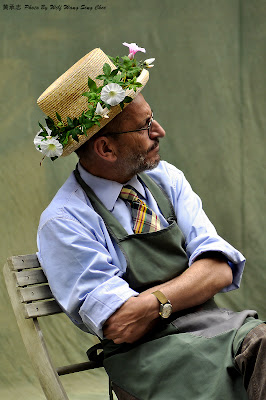
Just love how he look in his hat!


Just some photo of the flowers on sale

Just love how he look in his hat!


Just some photo of the flowers on sale
Tuesday, June 5, 2012
Festa della Republica
The Festa della Repubblica is celebrated on the second day of June, and it commemorates the institutional referendum of 1946 when (by universal suffrage)
the Italian population was called to decide what form of government
(monarchy or republic) to give to the country after World War II and the
fall of Fascism.
After 85 years of monarchy, with 12,717,923 votes for and 10,719,284 votes against, Italy became a Republic, and the monarchs of the House of Savoy were deposed and exiled. This is one of the most important Italian public holidays which, like 14 July in France and 4 July in the USA, celebrates the birth of the nation. A grand military parade is held in central Rome.
( Text from : http://en.wikipedia.org/wiki/Republic_Day#2_June_in_Italy )


A concert was held at Piazza San carlo for the celebration.

After 85 years of monarchy, with 12,717,923 votes for and 10,719,284 votes against, Italy became a Republic, and the monarchs of the House of Savoy were deposed and exiled. This is one of the most important Italian public holidays which, like 14 July in France and 4 July in the USA, celebrates the birth of the nation. A grand military parade is held in central Rome.
( Text from : http://en.wikipedia.org/wiki/Republic_Day#2_June_in_Italy )


A concert was held at Piazza San carlo for the celebration.

Monday, June 4, 2012
City Hall of Turin
City Hall of Turin, the building itself isn't so much glamour as other historical buildings of the city, but with the piazza in front of it, the overall view can be quite fascinating, often weekend market is held at piazza.


Sunday, June 3, 2012
Little Flags
Saw these little flags hanging around the San Domenico church, not sure what is the occasion....


Saturday, June 2, 2012
Porta Palatina
The Palatine Towers (Italian: Porte Palatine; Piedmontese: Tor Roman-e) is an ancient Roman-medieval structure in Turin, Italy. The structure served as one of four Roman city gates, which allowed access from north to the cardus maximus, the typical second main street of a Roman town. They are located near the Duomo di Torino and Palazzo Reale.
In its current appearance, the building comprise two polygonal towers, of sixteen sides each, and a central gate. Only the latter is an original Roman structure, the towers having been added in the following years. The merlons are from 1404.

The name Porta Palazzo comes from the Latin Porta Palatii (“gate of the palace”), referring to the connected Imperial Palace, which housed numerous historical figures, including the Lombard kings and Charlemagne, and was later the seat of the communal authorities.
During the early eighteenth-century period of urban reconstruction in Turin, the gate was preserved only through the personal intervention of architect Antonio Bertola. It was one of the few ancient landmarks to be saved from destruction.
(Text taken from : http://en.wikipedia.org/wiki/Palatine_Towers )
In its current appearance, the building comprise two polygonal towers, of sixteen sides each, and a central gate. Only the latter is an original Roman structure, the towers having been added in the following years. The merlons are from 1404.

The name Porta Palazzo comes from the Latin Porta Palatii (“gate of the palace”), referring to the connected Imperial Palace, which housed numerous historical figures, including the Lombard kings and Charlemagne, and was later the seat of the communal authorities.
During the early eighteenth-century period of urban reconstruction in Turin, the gate was preserved only through the personal intervention of architect Antonio Bertola. It was one of the few ancient landmarks to be saved from destruction.
(Text taken from : http://en.wikipedia.org/wiki/Palatine_Towers )
Friday, June 1, 2012
Concert For Smart Action
A night of Celtic music for the environment....with the Lab Graal.
Great music, great performance.


Great music, great performance.


Subscribe to:
Posts (Atom)